THE MODERN EDINBURGH AFFE MIT SCHÄDEL
A sculpture refined over time.
The Edinburgh Affe mit Schädel has a history of its own. It began in 2008 as an effort to reproduce Hugo Rheinhold's remarkable sculpture, drawing upon surviving historical examples and the skills of an Edinburgh bronze foundry.
The earliest cast established a starting point, not a finished standard. Over the years that followed, the sculpture was repeatedly examined, reconsidered and refined. Details that had softened through successive reproductions were revisited, and the relationship between individual elements was progressively improved.
What emerged was not a reinterpretation of Rheinhold's work, but a continuing attempt to recover its character and precision.
A sculpture known at first hand
Not merely an image in a catalogue.
One reason that process was possible was unusually close access to the sculpture itself.
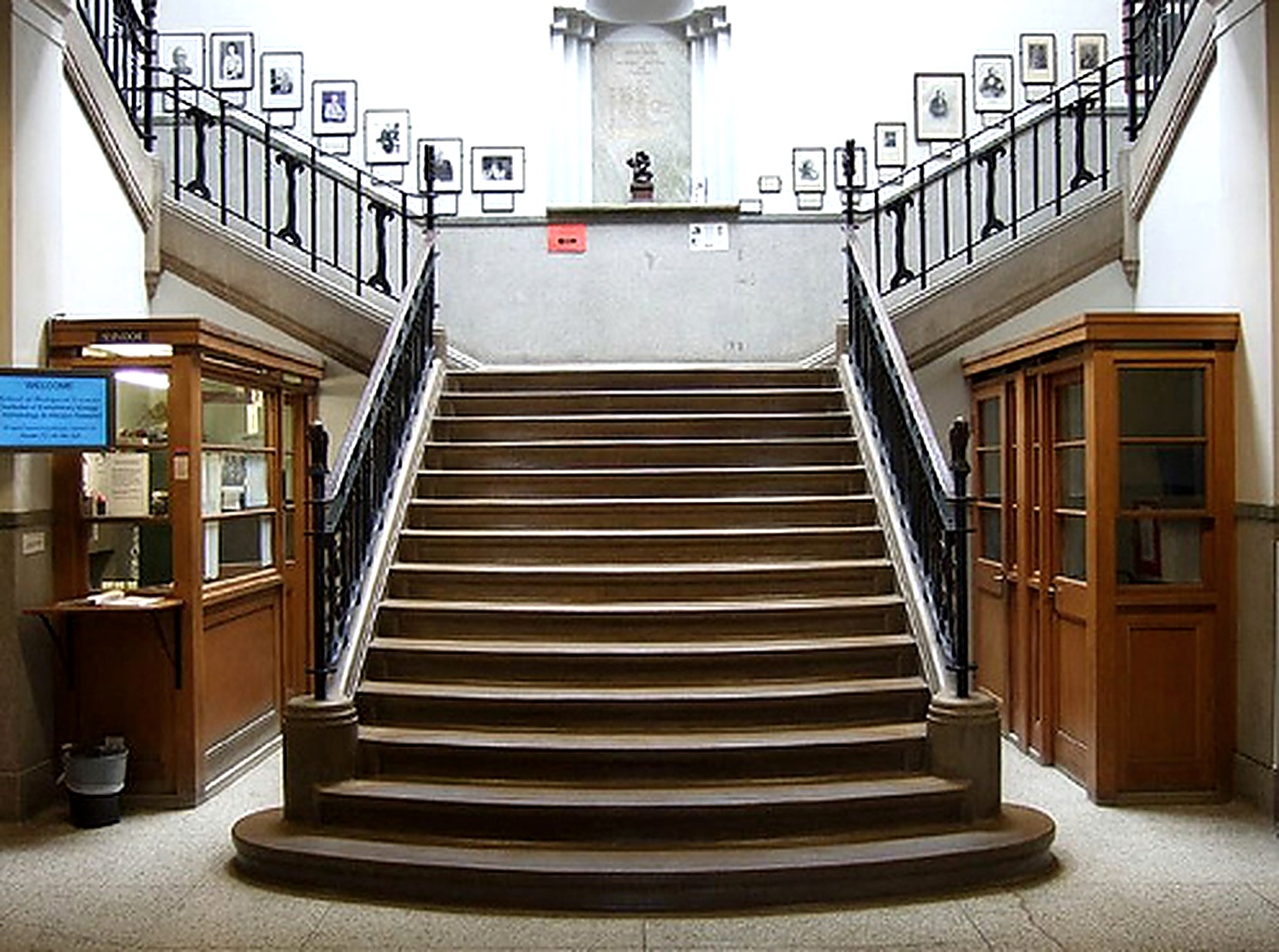
A full-size Gladenbeck Affe mit Schädel stood on the main staircase of the Institute of Evolutionary Biology at the University of Edinburgh. For years it was part of everyday life in the building, a sculpture passed repeatedly and examined at close quarters.
That familiarity mattered when the modern Edinburgh bronze began to develop.
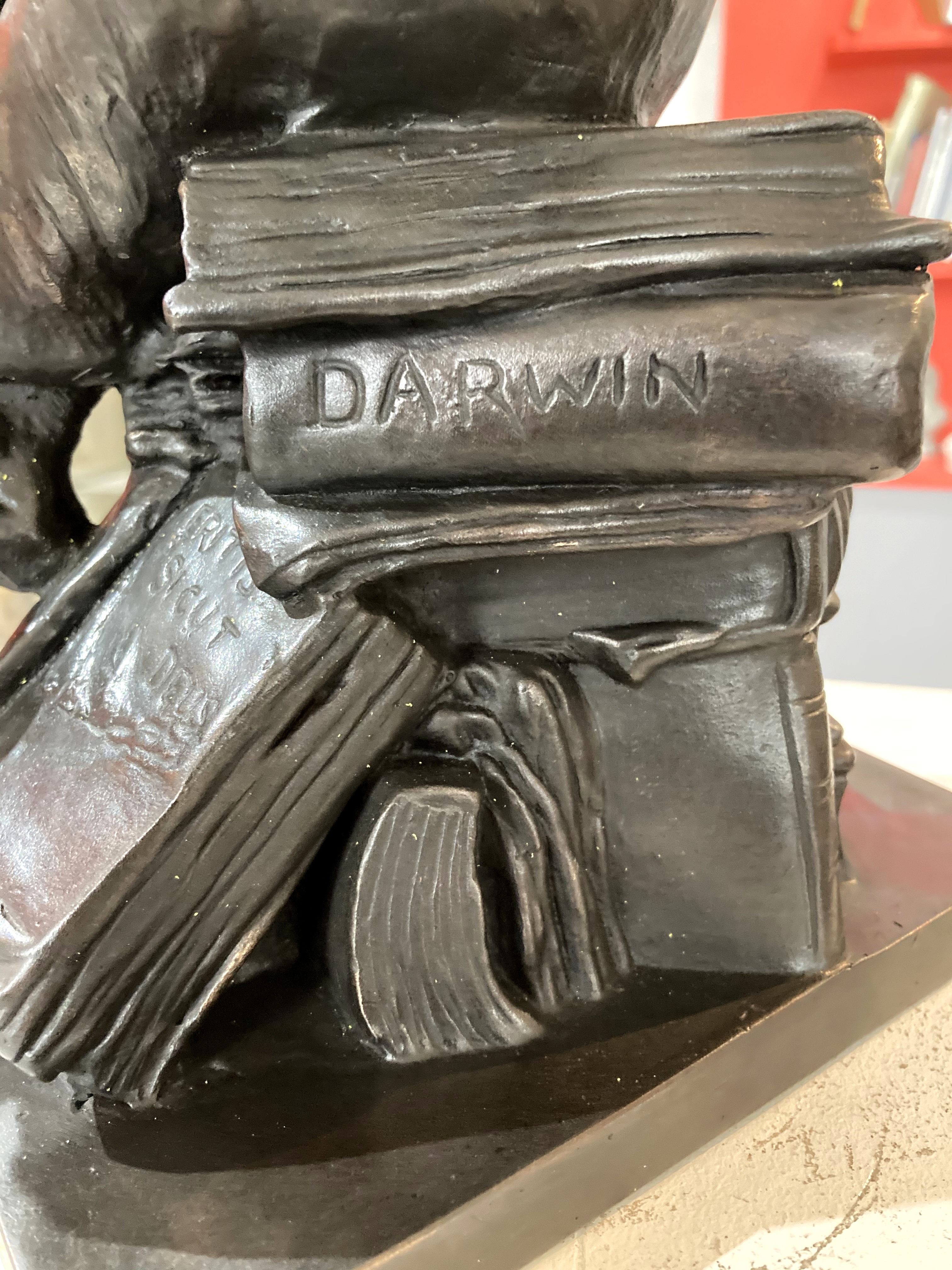
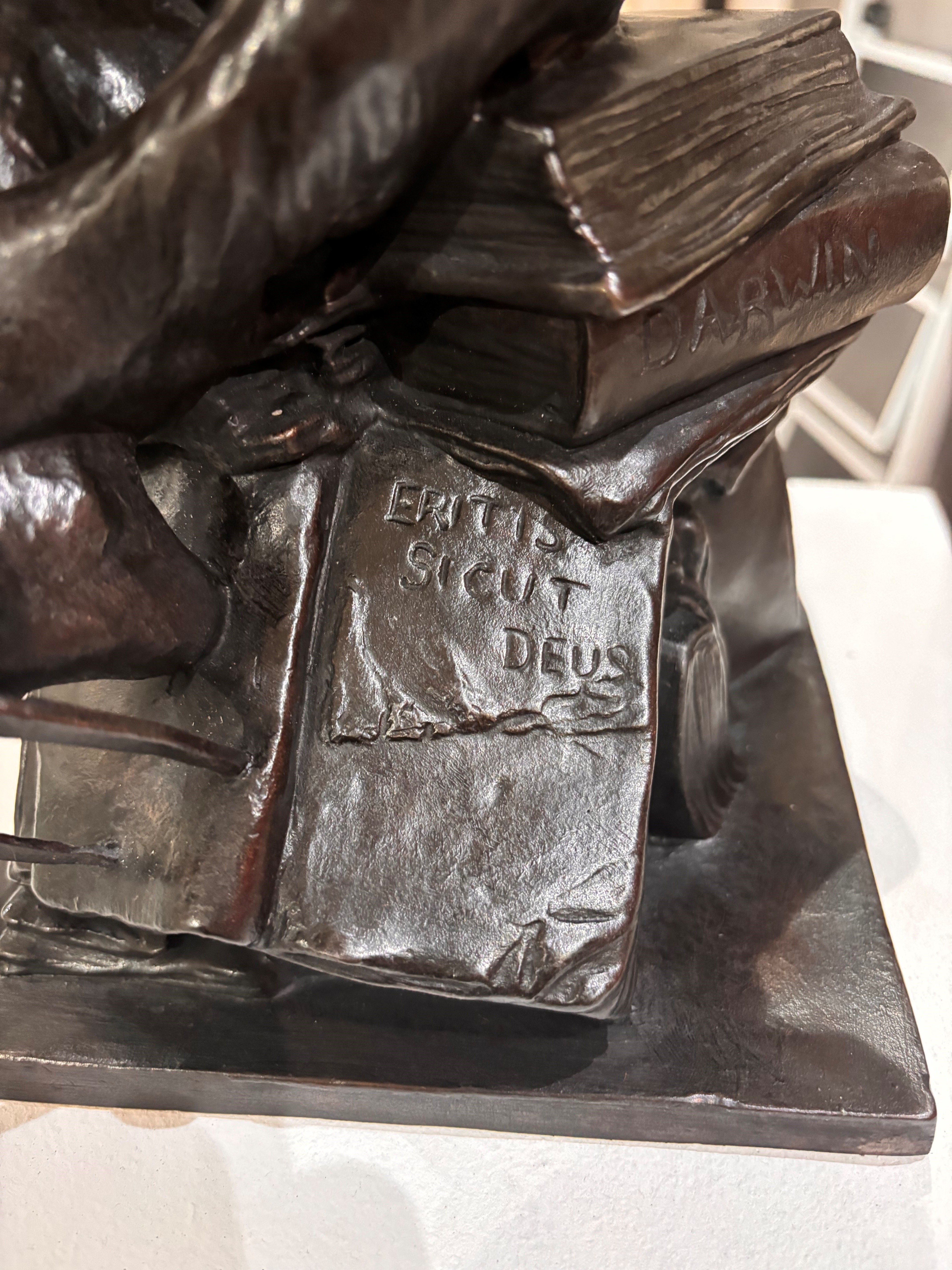
Historical photographs and surviving examples provided further points of comparison. Differences that might seem inconsequential in an ordinary reproduction mattered here because Affe mit Schädel rewards close looking. The expression of the face, the relationship between hand and skull, the books and their inscriptions, the geometry of the callipers and the modelling of apparently minor surfaces all contribute to the character of the sculpture.
Refinement rather than reinvention
The aim was never to redesign Rheinhold's sculpture.
The ambition was something more personal than producing another reproduction. Rheinhold had created a sculpture of remarkable originality, wit and intellectual depth, yet many of the copies that followed failed to preserve the subtlety of his modelling. Important details had become softened, altered or lost, diminishing the qualities that made the original so extraordinary.
The Edinburgh project became a labour of love: a continuing effort to do justice to Rheinhold's achievement, to honour the artist behind the sculpture and, in a small but tangible way, to keep his work and memory alive.
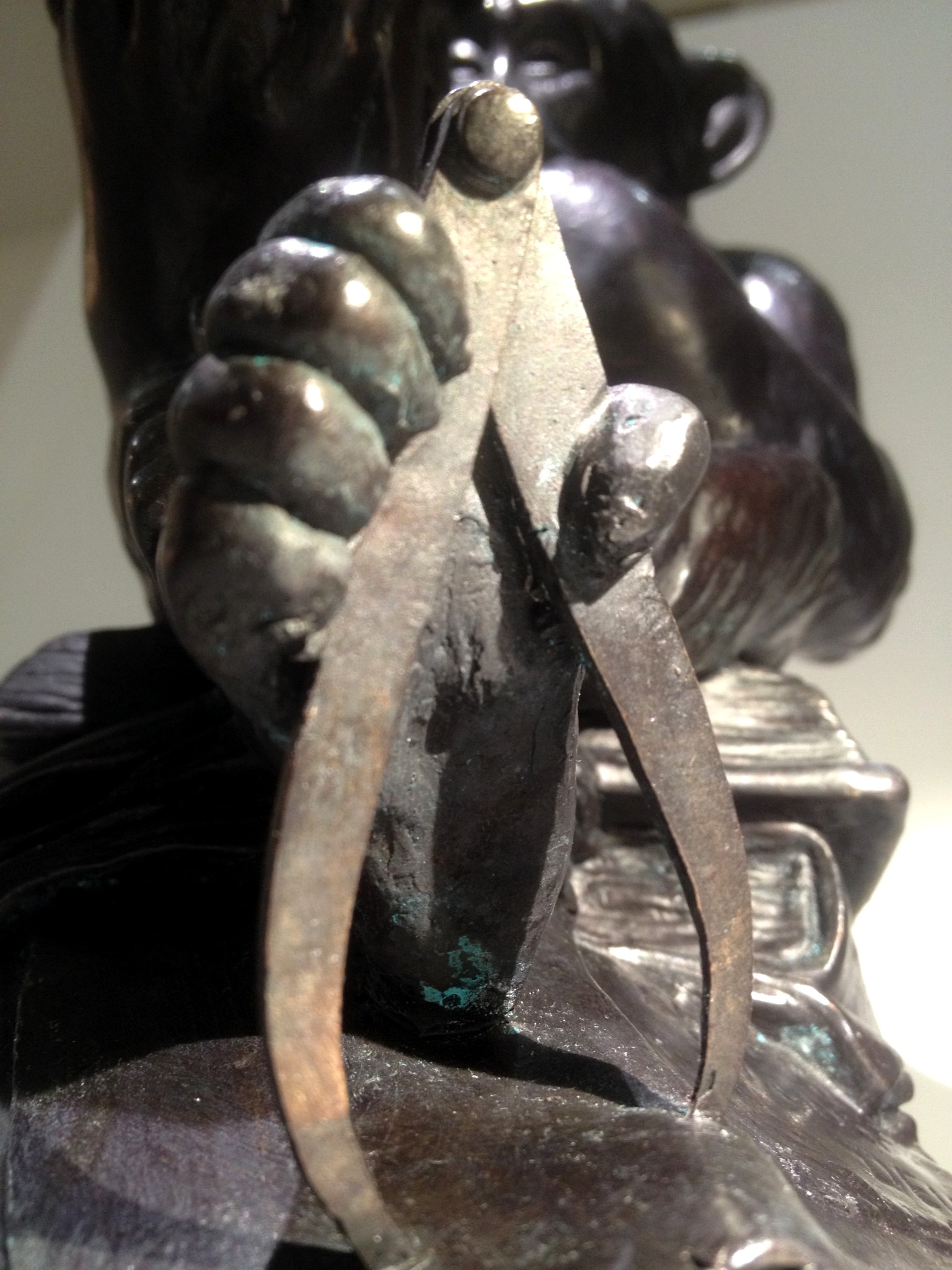
That commitment has guided the Edinburgh Affe mit Schädel through successive refinements. The face and fingers received attention. The skull, books and inscriptions were sharpened and clarified. Edges and surfaces were revisited. The callipers, such an important part of Rheinhold's composition, were substantially refined in their form, weight and relationship with the hand and surrounding sculpture.
The present callipers show the level of attention involved. Their right arm, as the sculpture is viewed from the front, is positioned to coincide precisely with the indentation in the surface of the page beneath it. It is a small relationship, easily missed at first glance, but exactly the kind of detail that matters when the sculpture is examined at close quarters.
No single alteration defines the present bronze. What matters is their cumulative effect.
The result is an Affe mit Schädel in which the individual elements once again work together: the ape absorbed in thought, the human skull held before it, the instruments of measurement in its hand and the accumulated books of human knowledge beneath it.
Powderhall Bronze
Craft continues after the mould.
That development has taken place with Powderhall Bronze in Edinburgh.
Lost-wax casting is capable of reproducing extraordinarily fine detail, but casting alone does not make a finished sculpture. Wax preparation, investment, casting, chasing, assembly and patination all involve skilled decisions and hand work.
Powderhall's role has consequently been more than that of a manufacturer reproducing an anonymous object from a mould. The foundry has participated in the continuing process of refinement, identifying details requiring attention and resolving them in bronze.
Each present-day Affe mit Schädel is individually cast, chased, finished and patinated in Edinburgh.
Each casting receives individual attention throughout its finishing. The aim is consistency of sculptural quality, while allowing the subtle character that comes from work completed by hand.
Details that matter
Words and objects made physical.
Rheinhold packed an extraordinary amount into a sculpture only about thirty centimetres high.
The books are not simply a pedestal. DARWIN is physically built into the sculpture. Genesis lies open beneath the ape. Shakespeare and the intellectual world surrounding Rheinhold's image contribute to a composition in which words, objects and modelling are inseparable.
That makes apparently small details unusually important.
A softened inscription, an altered edge or an incorrectly proportioned instrument does more than change the finish. It can change the way the sculpture reads.
The Edinburgh refinement has therefore concentrated precisely where Rheinhold concentrated his own attention: on the details through which the idea becomes physical.
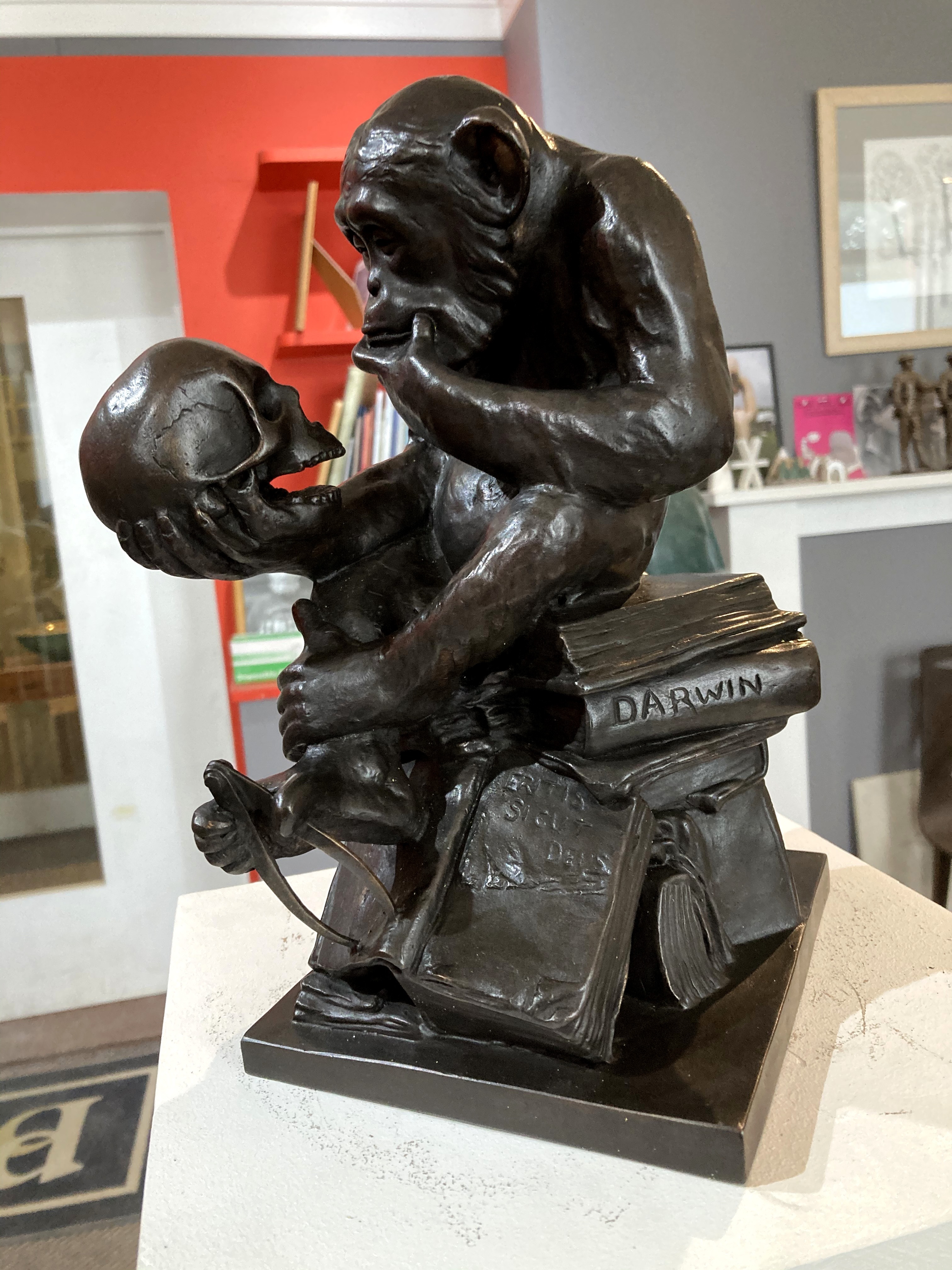
The present Edinburgh bronze
The product of a long process, not a replica frozen at its first attempt.
Each Edinburgh Affe mit Schädel is individually commissioned, cast and finished at Powderhall Bronze. The present sculpture brings together the results of years of comparison with historical examples and the craftsmanship of a specialist fine-art foundry.
For the current price, worldwide delivery and commissioning arrangements, visit the Commission page.