1853–1900
Most people know the sculpture.
Very few know the sculptor.
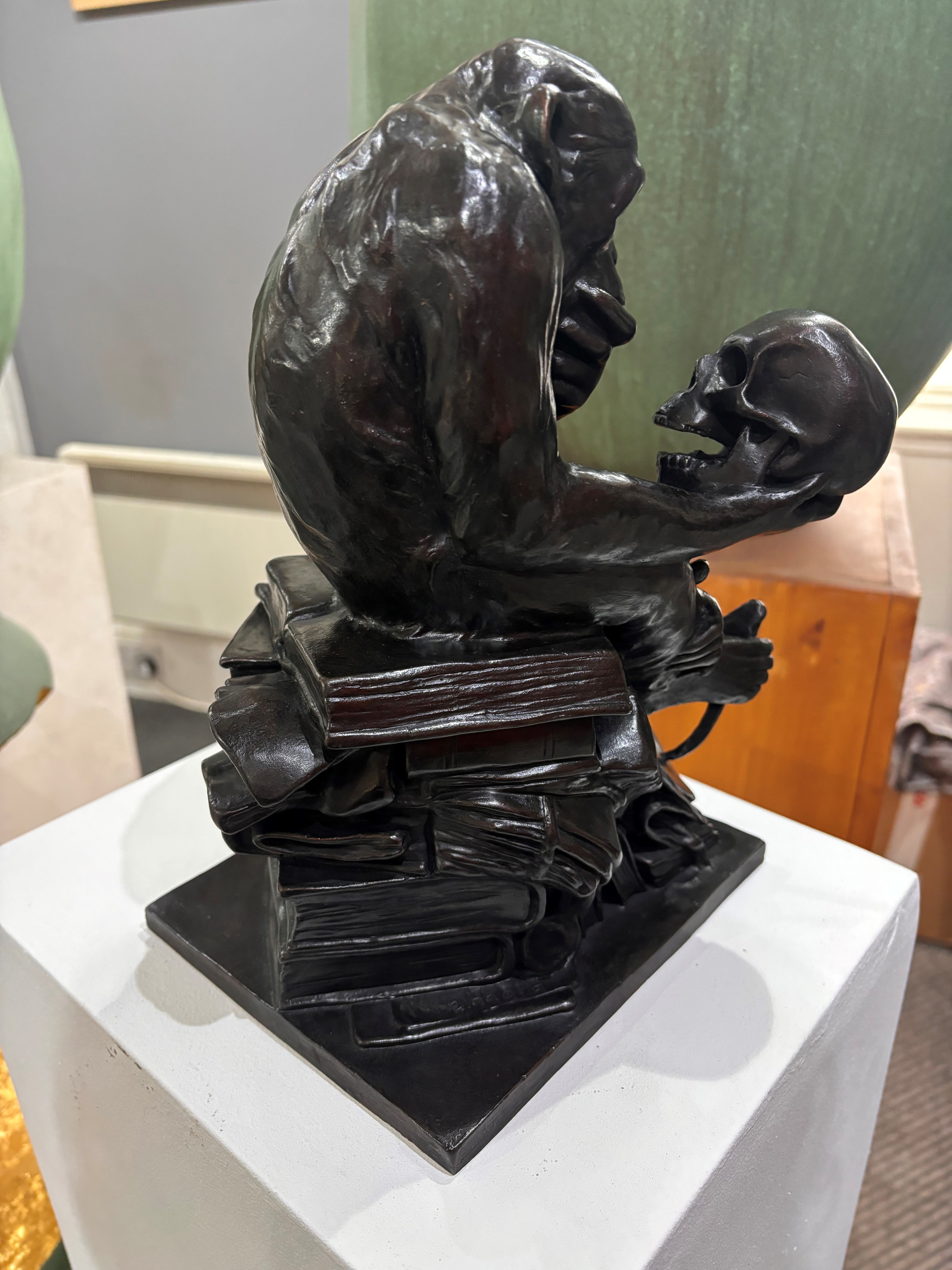
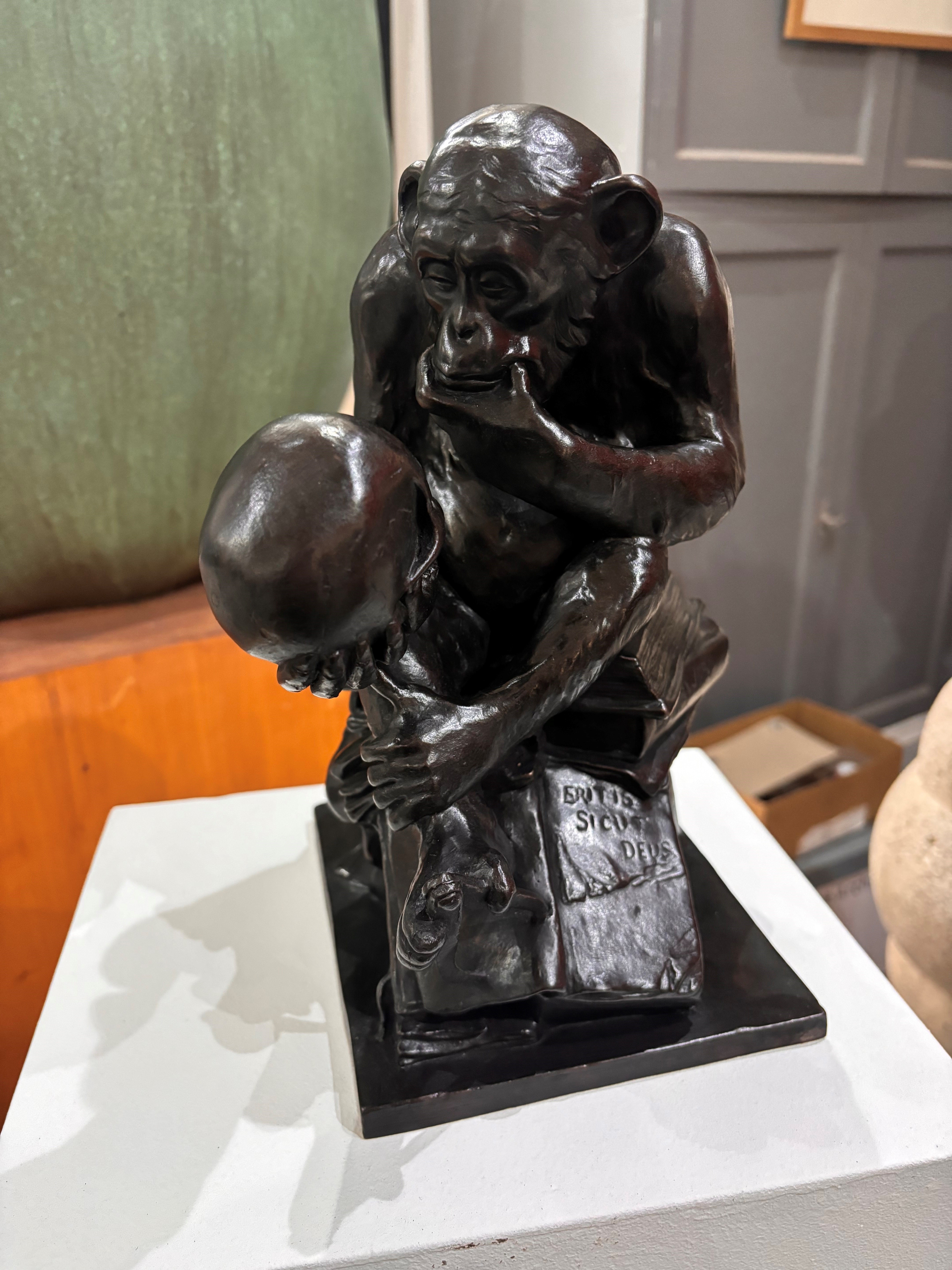
Hugo Rheinhold is remembered, when he is remembered at all, for one extraordinary object: a chimpanzee seated on a pile of books, holding a human skull and measuring it with callipers. Affe mit Schädel is witty enough to catch the eye and serious enough to keep it. It has travelled far beyond the reputation of the man who made it.
That imbalance is misleading. Rheinhold was not an anonymous modeller who happened upon a clever idea. He was a philosophically educated Berlin sculptor whose short career repeatedly returned to difficult subjects: knowledge and morality, suffering, technological power, political life and the contradictions within human civilisation. His sculptures were often built around an idea. They ask the viewer to complete the thought.
Seen in that wider setting, the famous ape stops looking like an isolated curiosity. It begins to look like the most durable surviving example of a distinctive artistic mind.
A late beginning
From philosophy to the sculptor’s studio
Rheinhold did not follow the conventional route of a child prodigy moving directly from drawing lessons into an academy. Born in 1853, he had already lived an adult life before committing himself to sculpture. He studied philosophy in Berlin and moved in circles concerned with ethics and social questions. In 1892 he helped establish the German Society for Ethical Culture, and in 1894 he addressed it on the moral principles that, in his view, could unite people across political and religious divisions.
That background matters because his later sculpture rarely feels content with surface appearance. Again and again the physical object carries an argument beneath it.
In 1886, in his early thirties, Rheinhold turned towards sculpture and worked in the studio of Max Kruse, already a recognised Berlin sculptor. Two years later he entered the Königliche Akademische Hochschule für die bildenden Künste, the Royal Academic College of Fine Arts in Berlin. From the winter of 1888–89 until the summer of 1892 he studied sculpture there, eventually becoming a master pupil in Ernst Herter’s sculpture class.
The speed of that transformation is worth noticing. Rheinhold entered formal Academy training in 1888 and completed Affe mit Schädel only four years later. Within another two years the National Gallery had acquired Am Wege. Soon afterwards he was trusted with a monumental commercial commission in Hamburg. The surviving sequence therefore shows an artist moving rapidly from student work to institutional recognition and ambitious public sculpture. His early classroom assessments and his later achievements belong in the same story: they record development rather than destiny. The interest today lies not in overturning the Academy’s judgement, but in watching a diligent mature student discover an unusually effective language of his own.
The Academy was an exacting place. Its teaching joined drawing and modelling with close study of human and animal anatomy. Rheinhold encountered a culture in which technical accuracy was expected, but composition remained paramount. Academy records are refreshingly unsentimental about him. Early assessments praised his diligence while judging his talent modestly; by 1892 Herter still described him as industrious, moderately gifted and making progress. They are useful records precisely because they make what followed more interesting. Rheinhold was not being announced as a genius by his teachers. He was learning his craft.
He learned to make sculpture in a world that demanded anatomical observation and technical discipline. What distinguished him was what he chose to do with them.
1892–1893
The work that changed everything
Affe mit Schädel was created at the end of Rheinhold’s Academy training in 1892 as his examination work. Its economy is striking. A small sculpture contains a chimpanzee, a human skull, callipers, a precarious library, a book marked DARWIN and an open volume carrying a deliberately incomplete quotation from Genesis. Every element can be read literally; together they become something far less stable.
The Academy context helps explain the compression. Anton von Werner had warned sculpture students against choosing formats so large that execution overwhelmed the compositional idea. Rheinhold did almost the opposite. He placed a maximum of significant detail in a compact statuette. Even the sutures indicated on the skull were anatomically correct, while the chimpanzee was modelled as an animal rather than simply turned into a furry human.
In 1893 the sculpture appeared at the Große Berliner Kunstausstellung as Affe, einen Schädel betrachtend, “Ape contemplating a skull”. The exhibition placed Rheinhold’s peculiar little philosophical sculpture before a much wider public. It was memorable, legible from a distance and yet capable of rewarding prolonged inspection.
The Berlin foundry Hermann Gladenbeck & Sohn acquired the original sculpture and the right to produce bronze casts. Foundry catalogues later offered it in several sizes. That translation into bronze mattered enormously. A work conceived within an Academy could now enter studies, libraries, medical institutions and private collections. Rheinhold’s ape began the long migration that would eventually make the sculpture far more famous than its creator.
From Gladenbeck to Edinburgh →
Its success was not merely a lucky joke. It established a pattern visible elsewhere in Rheinhold’s work: an apparently straightforward scene made unstable by symbolism. The viewer is invited in by recognition, then left with a question.
Beyond the Affe
A short career, and a much wider imagination
Rheinhold worked as a sculptor for little more than a decade. Later researchers have identified roughly thirty sculptures and busts from those years. Many have vanished; others survive only through catalogues, archival descriptions or old photographs. What remains is enough to show that Affe mit Schädel was not an isolated burst of invention.
Am Wege
Immediately after the compact Affe mit Schädel, Rheinhold attempted something almost opposite in scale and emotion. Am Wege was a life-sized group showing an exhausted young mother with her child collapsed beside a wayside tabernacle. Richter and Schmetzke connect the work with Rheinhold’s grief after the early death of his wife and the loss of his family life.
The plaster model was shown at the Great Berlin Art Exhibition in 1894 and made a sufficiently strong impression for the Berlin National Gallery to acquire it and commission a marble version. The commission is important evidence of Rheinhold’s standing in the 1890s. He was not simply the maker of a popular novelty. A major national institution considered this larger, sombre work worthy of permanent preservation.
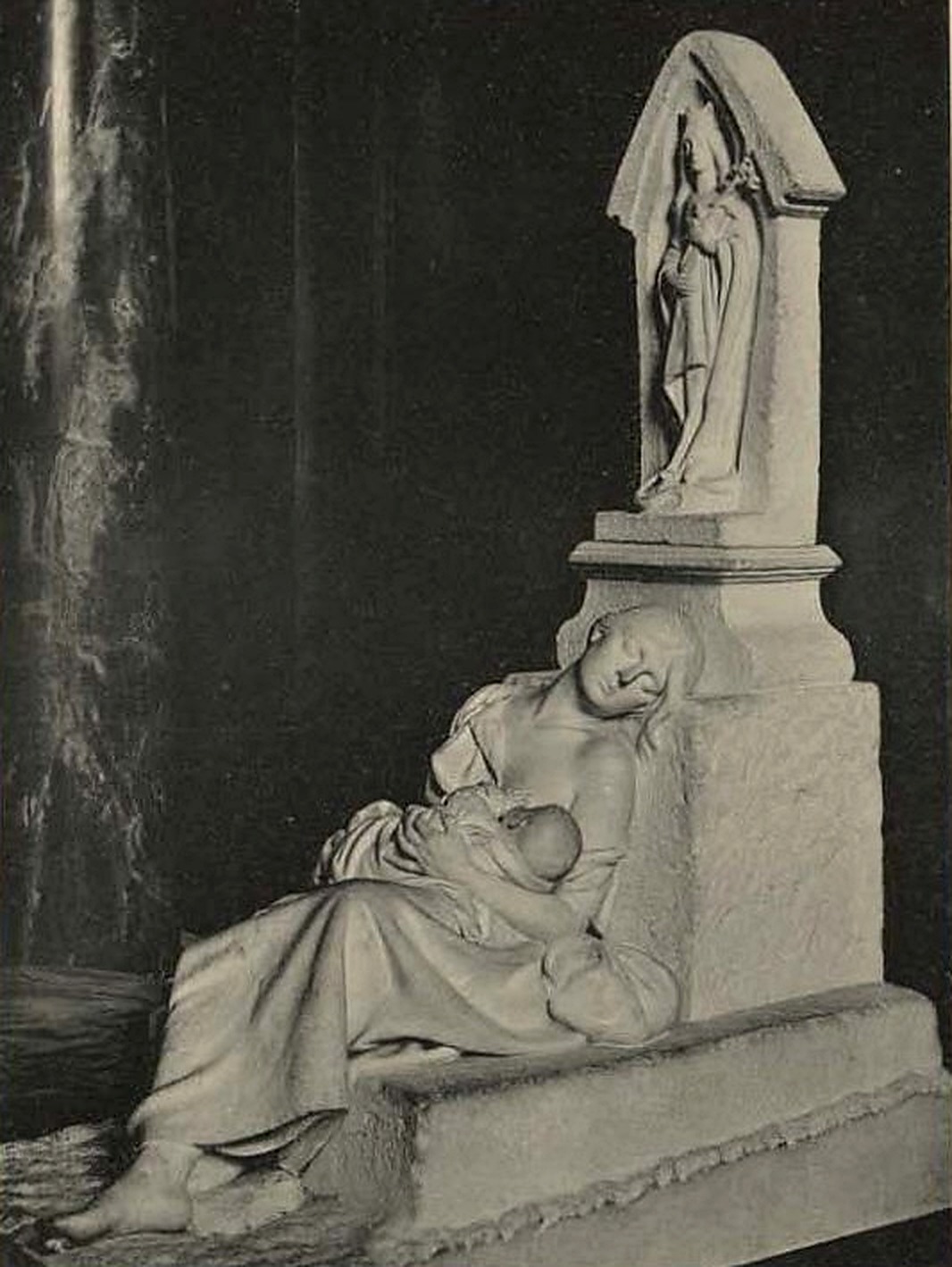
Life-size group of an exhausted young mother and child collapsed before a wayside tabernacle. The plaster was shown at the Great Berlin Art Exhibition in 1894; the Berlin National Gallery acquired it and commissioned the marble version, completed in 1896.
Readers, monks, fountains and public commissions
The documentary trail records a body of work extending into genre sculpture, portraiture and public commissions. Titles such as Lesende Mönche and Ausverkauft point towards scenes that could be read immediately but were capable of carrying social observation beneath the anecdote. Fountain work and architectural commissions placed sculpture into public and commercial settings rather than confining it to the exhibition hall.
Not every surviving title can yet be matched with an authenticated image, and the record is uneven. That is part of the fascination of Rheinhold research. His catalogue is being reconstructed from fragments rather than inherited as a neat museum inventory. The missing images should not be filled with confident invention. Where the object is lost, the documentary absence belongs to the story.
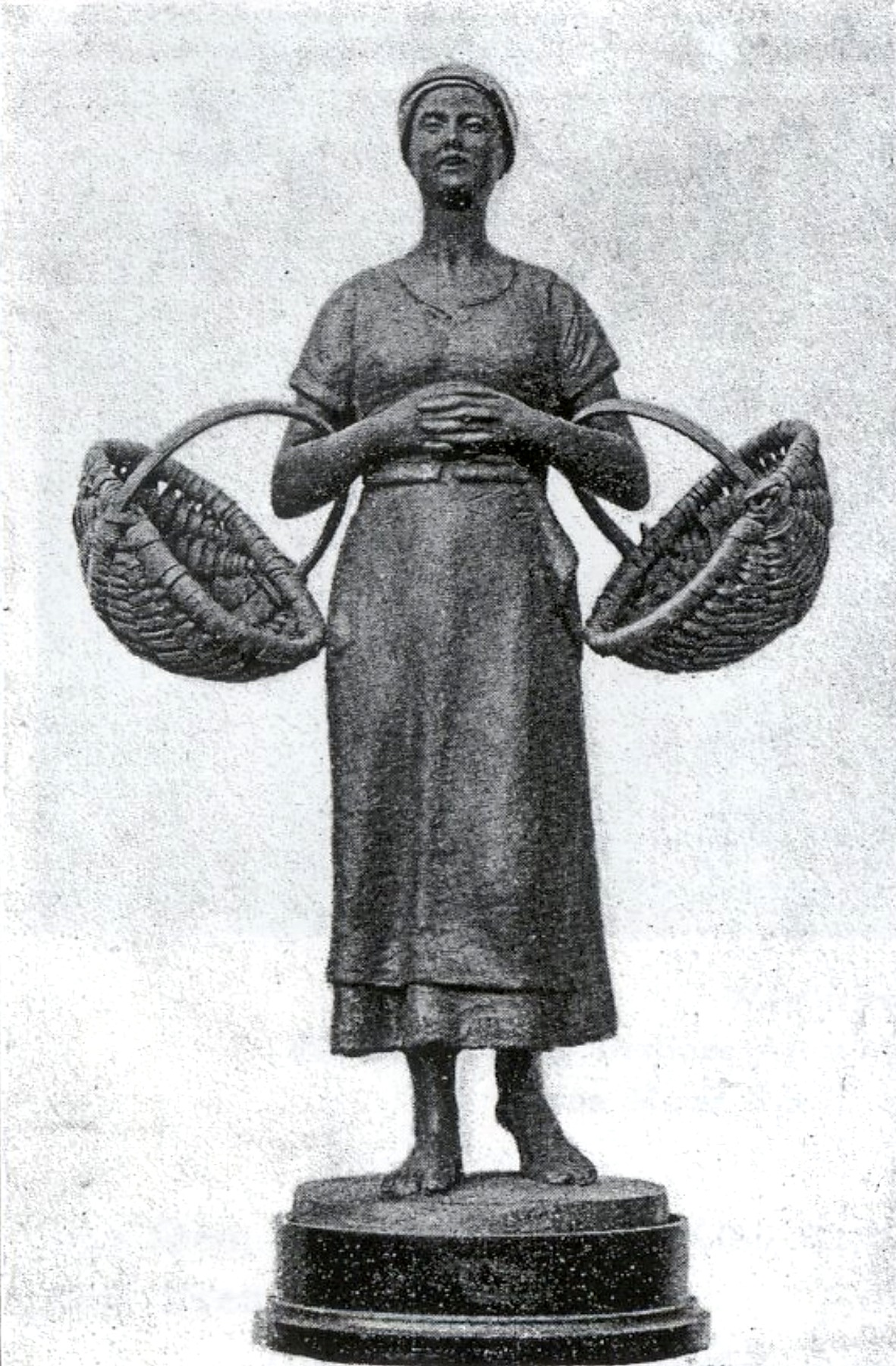
A market woman with empty baskets. One of three late Rheinhold works, with Schnitterin and Lesende Mönche, taken into Gladenbeck’s regular small-bronze catalogue.
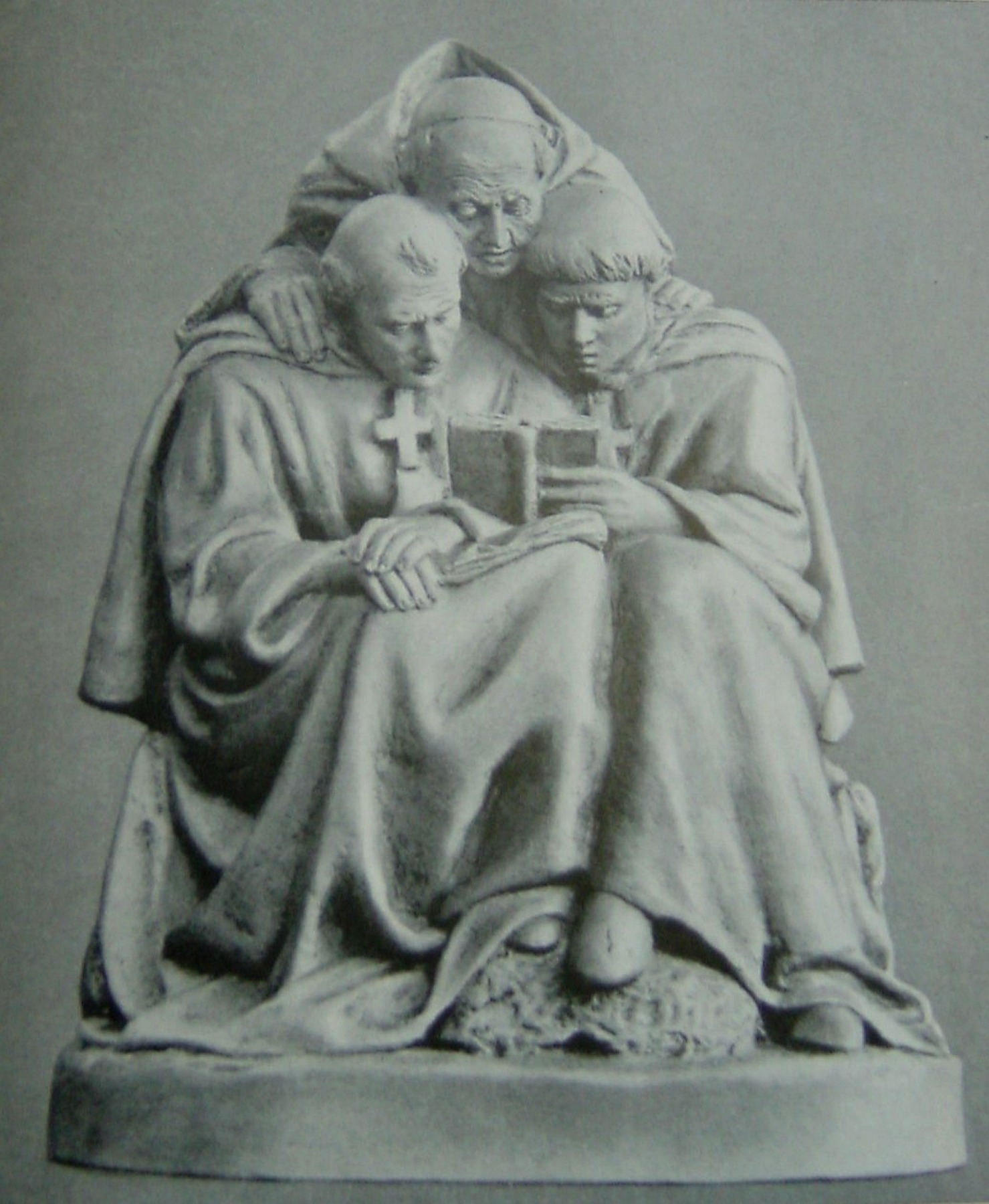
A compact group of three monks gathered closely around a book, also marketed by Gladenbeck as a small bronze.

Rheinhold’s last major work, begun in 1896 and shown at the Great Berlin Art Exhibition of 1900. Contemporary reporting described two water deities in a secluded grotto stretching towards one another for a kiss. Historical photograph published in Berliner Architekturwelt, 1901.
A lost monument
Dynamit im Dienste der Menschheit
Dynamite in the Service of Humanity
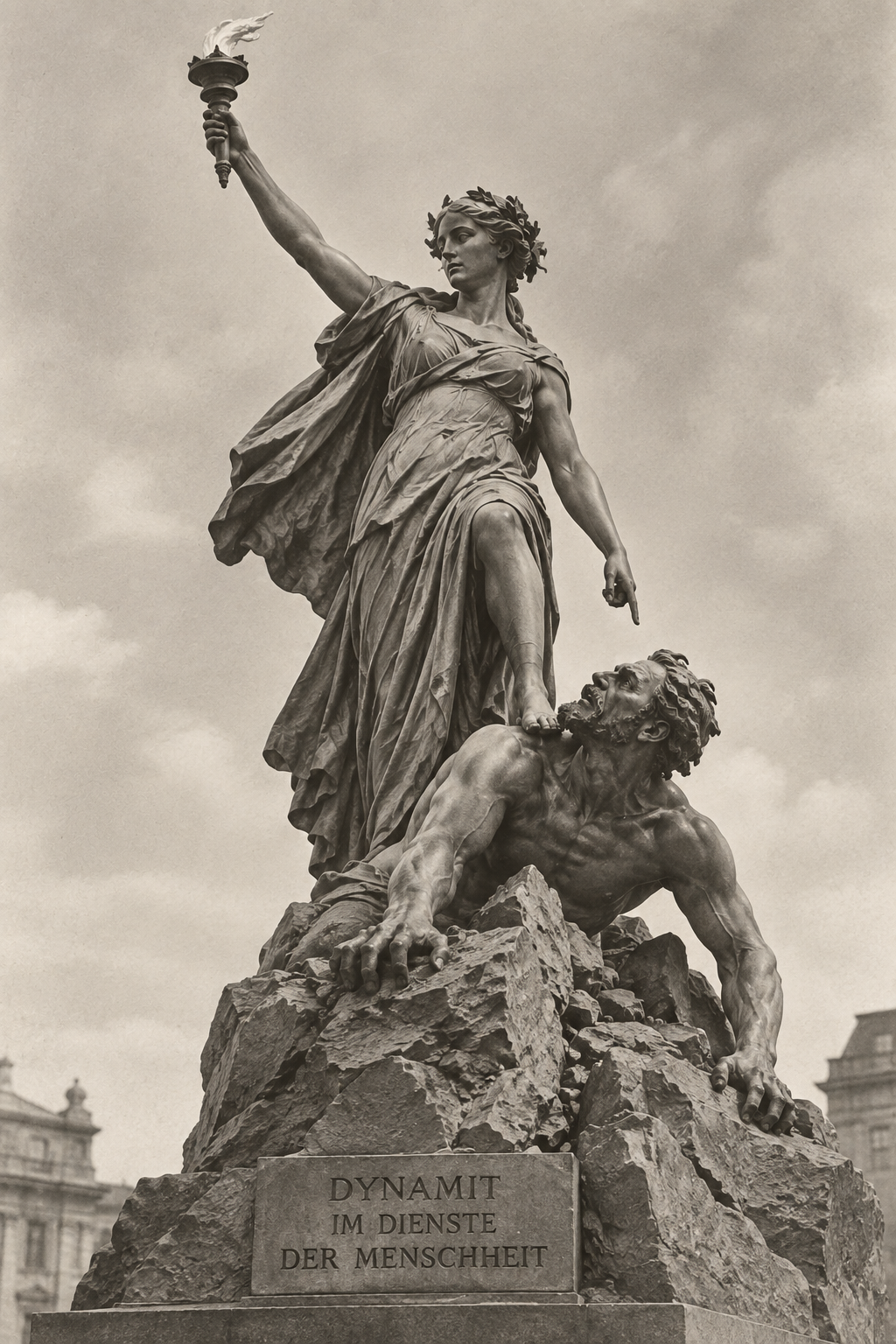
Created for this website from surviving contemporary descriptions published in 1897 and later research by Richter & Schmetzke. No authenticated photograph of the original monument is presently known.
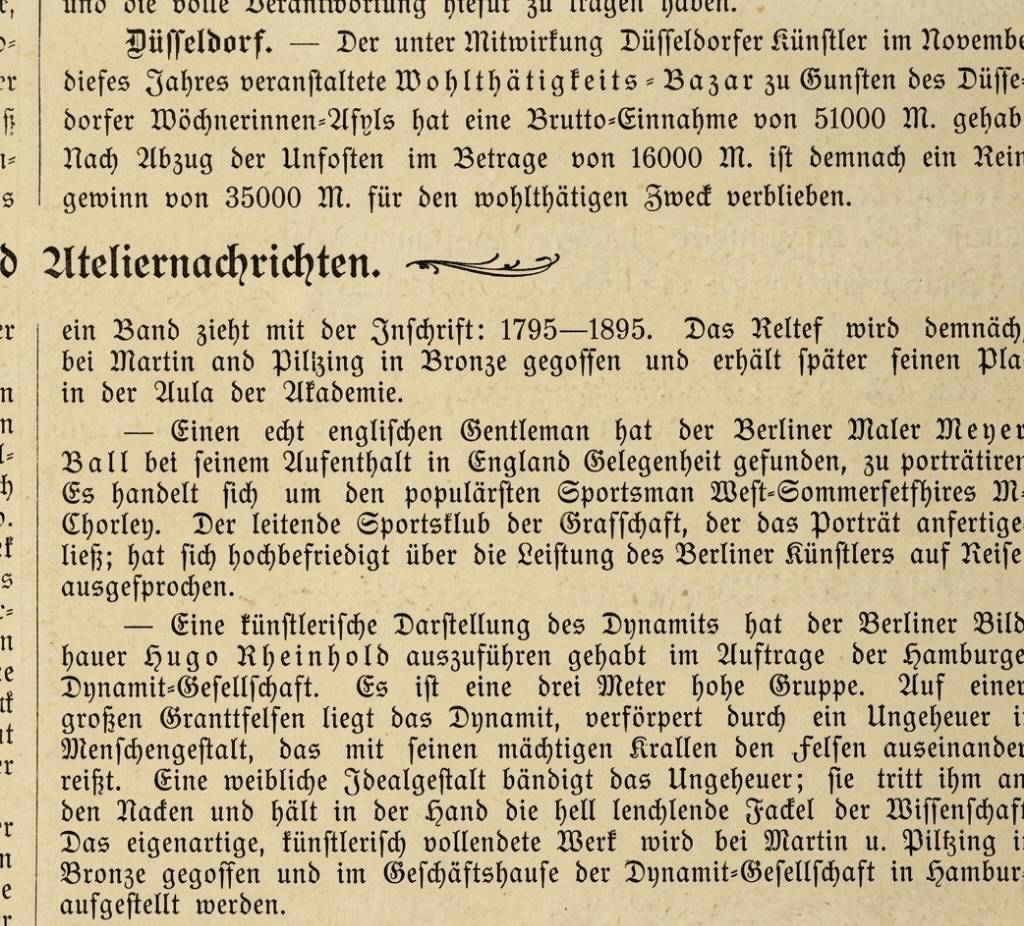
One commission reveals just how far Rheinhold’s imagination could travel beyond the famous ape. In 1896–97 the Hamburg Dynamite Company commissioned him to create an allegorical monument approximately three metres high. For many years the work was known chiefly by title. A rediscovered contemporary description in the journal Deutsche Kunst allows its composition to be reconstructed with unusual clarity.
Dynamite itself was personified as a monstrous human-like figure lying on a great granite rock. Its powerful claws tear the rock apart. Above it stands an idealised female figure who subdues the monster by stepping on its neck. In her hand is a brightly shining torch: science.
The image is not an uncomplicated celebration of explosives. Rheinhold made destructive power physically enormous and frightening. Science does not erase that force; it restrains and directs it. The idea is remarkably close in spirit to the tension within Affe mit Schädel. Knowledge is powerful, but power alone is not wisdom.
The contemporary notice stated that the group was to be cast in bronze by Martin & Piltzing and installed in the Hamburg company’s business premises. The original monument did not survive the destruction of the Second World War. No authenticated photograph is presently known to us, which is why the reconstruction shown here is explicitly labelled as an artist’s impression rather than historical evidence.
The pattern
Sculpture as an argument
Rheinhold’s surviving and documented work suggests an artist drawn to allegory: not decoration for its own sake, but physical forms made to carry ideas. He could be emotional, as in Am Wege; political and ethical, as in his portraits and public life; or deliberately paradoxical, as in the dynamite monument and the philosophical ape.
Science appears not simply as a collection of discoveries but as a human activity with moral consequences. Religion appears not simply as belief but as inherited language and symbolism. Classical and biblical references sit beside modern technology. Animals, books, tools and human figures become participants in arguments about what civilisation is doing and what it thinks it knows.
This helps explain why Affe mit Schädel remains difficult to reduce to a single message. Rheinhold seems repeatedly to have preferred situations in which opposing ideas coexist. The ape can be comic and serious. The skull can signify death and scientific evidence. The Genesis quotation can invoke religion while its torn ending undermines certainty. The callipers can represent disciplined measurement while the entire scene asks whether measurement is sufficient.
It would be too much to claim a single philosophy governing every sculpture. The evidence is incomplete, and much of the work is lost. But it is reasonable to recognise a recurring artistic habit: Rheinhold gave the viewer enough information to begin interpreting and resisted doing the final intellectual work on the viewer’s behalf.
Portraiture and public life
A sculptor among thinkers and reformers
Rheinhold’s intellectual interests were not confined to allegorical sculpture. His involvement in the German Society for Ethical Culture placed him among people debating morality, religion and social reform in imperial Germany. He served for years within Berlin’s Jewish community and formed friendships with academics including the philosopher Georg von Gizycki, physician Samuel Kristeller and astronomer Wilhelm Julius Foerster.
Late in his career he modelled the Social Democratic politician August Bebel. Contemporary art-historical assessment praised the 1899 portrait for being unusually lifelike rather than stiff and official. It is another reminder that Rheinhold could work convincingly outside the symbolic puzzle. Yet even here his subject connected him to the political and ethical arguments of his age.
The broader biography changes the way the Affe mit Schädel looks. A sculptor who had studied philosophy, participated in ethical debate, learned anatomy and moved among scientists and reformers did not choose Darwin, Genesis, a skull and measuring instruments from an intellectual vacuum. That does not reveal a secret authorised interpretation, but it gives the sculpture a richer historical setting.
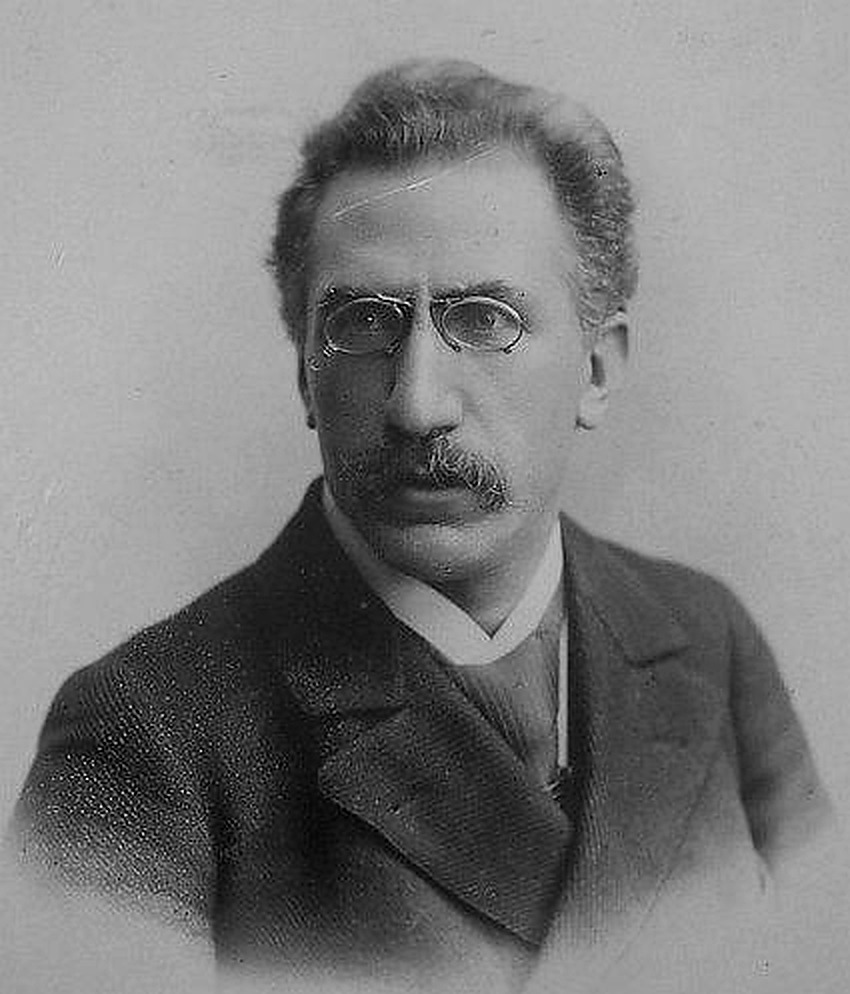
After leaving commerce, Rheinhold studied science and philosophy at Friedrich-Wilhelms-Universität, became active in Berlin’s Jewish community and helped found the German Society for Ethical Culture in 1892. He turned to sculpture in 1886 and studied at the Royal Academy from 1888 to 1892.
1900
A career abruptly shortened
Hugo Rheinhold died in 1900 at only forty-seven. His mature sculptural career had lasted scarcely more than a decade. That fact alone helps explain the uneven legacy. There was little time for the long sequence of public monuments, professorships, pupils and institutional honours through which an artist’s name can become fixed in cultural memory.
Physical survival was equally cruel. Some works disappeared. Others were destroyed. Plaster models, private commissions and works tied to buildings are particularly vulnerable to changes of ownership, fashion and war. The great dynamite monument vanished. Even works once acquired by major institutions could fall from view as collections were moved, damaged or reorganised.
Meanwhile the smallest sculpture proved unexpectedly resilient. Gladenbeck’s bronze editions dispersed Affe mit Schädel widely enough for examples to survive in collections far from Berlin. Its compactness helped. So did its subject. Every new generation encountering Darwin, human origins, science and religion could discover the joke and argument afresh.
Rheinhold’s name faded while his ape continued travelling.
Rediscovery
Reassembling a life from scattered evidence
The modern recovery of Rheinhold has depended on patient historical work rather than a single archive waiting to be opened. Jochen Richter and Axel Schmetzke brought together exhibition catalogues, foundry material, Academy records, biographical sources and surviving works to reconstruct both the sculptor and the intellectual world around Affe mit Schädel. Schmetzke’s continuing research helped connect examples of the sculpture and make Rheinhold material accessible to an English-speaking audience.
That work also changes the character of the story. An Academy register can tell us how Rheinhold’s teachers judged his progress. An exhibition catalogue can place a sculpture in a particular room in a particular year. A foundry catalogue can establish what Gladenbeck actually offered. A forgotten paragraph in an 1897 art journal can suddenly reveal the entire composition of a three-metre monument thought lost to history.
There are still gaps. Some titles survive without images. Some objects may survive without secure identification. Claims repeated for decades can turn out to rest on surprisingly thin evidence. For that reason, the most interesting Rheinhold research is not about making the story tidier than the sources allow. It is about showing what can be known, what is probable and what remains open.
The result is an ongoing historical detective story. Rheinhold is no longer merely the name cast into the base of a famous bronze. Piece by piece, the artist is coming back into view.
A short life in sculpture
Hugo Rheinhold · timeline
Born 25 March in Oberlahnstein.
Turns from philosophy towards sculpture and works in Max Kruse’s studio.
Begins formal study at Berlin’s Royal Academic College of Fine Arts.
Completes the statuette as his examination work at the end of his training.
The ape is exhibited publicly; Gladenbeck acquires the sculpture and reproduction rights.
The life-sized group is exhibited, acquired by the National Gallery and commissioned in marble.
Creates Dynamit im Dienste der Menschheit for the Hamburg Dynamite Company.
Completes the lifelike portrait sculpture of the politician.
Rheinhold dies aged forty-seven, ending a sculptural career of little more than a decade.
Affe mit Schädel continues in individually commissioned bronze while research restores the story of its maker.
Rheinhold left no manifesto explaining the ape. Perhaps that is fitting. His most enduring work has survived because it still requires something from the person standing in front of it.
Rheinhold's sculpture lives on
More than 130 years after Affe mit Schädel first appeared in Berlin, the sculpture is still being made in bronze.
In Edinburgh, each example is individually cast by the lost-wax process, finished by hand and produced to commission.
The result is not simply a reproduction of an unusual Victorian object. It is the continuation of a sculpture whose questions about knowledge, humanity and our place in nature have outlived the artist who first posed them.